Winter driving is challenging for most motorists.
Whether you live in a state that sees a lot of snow and ice every winter, or you live further south where you may only have a few weeks of nasty weather, winter driving can be hazardous.
Weather conditions can be unpredictable, placing extra demands on your vehicle and your driving skills.
To ensure your driving safety this winter season, you must be prepared.
As in so many circumstances in life a little preparation before hand can make all the difference later on.
Getting your vehicle ready for winter driving conditions is relatively easy and inexpensive.
One factor that is often overlooked is the importance of maintaining correct pressure in your tires. Maintaining the proper pressure helps optimize fuel economy and tire performance.
In fact, correct tire pressure boosts ride comfort along with performance and durability of your tires.
Under inflated tires can compromise both safety and fuel-efficiency.
One of the important external factors governing tire pressure is temperature change.
In fact, for every 10-degree change in temperature, a tire can lose approximately one pound per square inch (PSI).
So, while your tires were properly inflated all summer, they now will require additional air to maintain the proper pressure as the temperature begins to fall.
Winter Driving Preparedness
Sometimes the best tip for winter driving is just to stay at home, or at least remain where you are until snow plows and sanding trucks have had time to do their work.
If you chance driving in a heavy storm and crash on a snowy or icy road, you'll certainly be late arriving at your destination anyway or maybe not at all.
But since you can't always call take a day off, it's better to learn how to correctly deal with driving in the snow.
The most important thing you can do before anything else is to prepare your vehicle for winter by stocking it with necessary supplies and performing normal maintenance.
Things Every Car Needs in the Winter
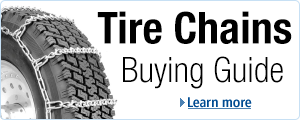
o Chains or winter-specific tires (called "winter tires" by tire makers) are necessary to provide adequate snow traction.
These tires provide superior traction over all-season tires.
Winter tires are best for drivers that will have to face snowy roads for several months.
Drivers that won't see a lot of snow may opt to carry chains that can be applied to their all-season tires in an emergency.
High-performance "summer" tires have little or no grip in snow.
If your vehicle has this type of tire, consider changing them now before the first snow.
When you buy winter tires, buy four.
o Good wiper blades are a must for winter driving.
This is a quick and easy fix that can make a huge difference in the safety of your vehicle.
There's nothing worse than turning on your wipers only to find that six months of sun have rendered them virtually worthless in a snow storm.
Make sure your windshield washer system works and is full of an anti-icing fluid and clean the inside of your windows thoroughly.
This will help when visibility is poor.
Consider carrying an extra bottle of windshield fluid in your vehicle.
o Keep your gas tank at the very least half-full. (most important if you are stranded in your vehicle.
o Charged cell phone with 12 volt charger.
o Have a good spare tire, wheel wrench and proper jack for your vehicle.
o Blankets or warm clothing.
These should always be in your car, but are doubly important to have in the winter.
Don't forget your warm gloves.
o Fresh radiator antifreeze.
Make sure that your engine coolant levels are correct and that your fluid is ready for the winter.
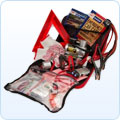
o A "Survival Kit" such as the Deluxe Auto Emergency Kit.
This kit should always remain in the vehicle and it contains sufficient equipment to help you through an emergency situation. Replenish after use.
o Non-perishable, high energy foods like unsalted canned nuts, dried fruits, hard candy or an emergency food and drinking water kit. These food and water kits have a 5-year shelf life.
o An emergency supply of any necessary medications.
You may be away from home longer than you think.
o Wooden stick matches in a waterproof container or a Zippo Lighter.
Driving In Snow and Ice:
First and foremost, always adjust your driving speed to existing conditions.
If you adjust your speed to the prevailing road conditions, the four key elements of winter driving become easier to master. The elements are steering, acceleration, braking and skid control.
The key is to use smooth inputs of the steering wheel, the accelerator and the brake.
Steering:
Initial movement of the steering wheel is important.
Begin turning the wheel gently, then accelerate the rate of motion once the turn is initiated, if it is necessary.
Too much steering is bad.
If a slick section in a turn causes your front tires to lose grip, the common - but incorrect reaction is to continue turning the steering wheel, causing the tire to lose additional traction.
A little bit of steering goes a very long way in an emergency.
Acceleration:
The first few fractions of an inch of pedal travel are critical.
Start slowly; once the vehicle is rolling, increase pressure on the accelerator; keep it below the wheel-spin threshold.
Braking:
Brake before you turn into a corner, steer through the corner at a safe speed, and then accelerate again when you straighten out of it.
Do not accelerate or brake when in a turn.
Skid Control:
If your car begins to skid remember to look and steer where you want to go!
Counter steer into a skid as necessary,
but do not shift the transmission and stay off the brake and gas pedals.
Other Winter Driving Hints:
o It is a good idea to let someone know your travel route and when you are expected to arrive.
o Be careful not to waste battery power when engine is not running.
Balance electricity energy needs: the use of lights, heat and radio.
o Be extra alert on residential streets.
Snowdrifts can hide children or other vehicles.
o Give snow plows plenty of room to do their job safely.
Be patient and follow at a safe distance.
o Be watchful for "black ice."
If the road ahead looks slick, it probably is.
Bridges, areas in the shade, off-ramps, and intersections are all likely areas for black ice.
Be cautious when approaching these areas, and be alert for any sudden loss of traction.
Black Ice is most prevalent in the early morning hours.
Test the traction with a smooth brake application when safe to do so.
o There is absolutely nothing more dangerous than freezing rain on a roadway.
While uncommon in most areas, when freezing rain occurs, roads become virtual skating rinks.
Avoid all driving during freezing rain conditions, if possible.
o Remember, using handheld cell phones or other devices quadruples the chance of an accident.
o Children who weigh less than 80 pounds and use adult seatbelts are almost four times more likely to be seriously injured in vehicle crashes than kids riding in booster seats.
Make sure young children use an approved child seat.
If You Do Become Stranded:
Even after proceeding very carefully and applying all of your driving skills,
You still find yourself stranded.
You may be stuck in a parking lot late at night, alongside a desolate rural road, or even in a ditch.
This is where the preparation that was mentioned earlier becomes a major factor.
o Do not leave your car unless you know exactly where you are, how far it is to help, and are certain you will improve your situation by leaving.
o To attract attention, light two flares and place one at each end of the car a safe distance away and hang a brightly colored cloth from your antenna.
o After checking for a blocked exhaust pipe, run the engine and heater for about 10 minutes every hour or so depending upon the amount of gas in the tank. (glad you filled the tank now, aren't you) Check for snow blocked exhaust pipe regularly.
o To protect yourself from hypothermia use woollen clothes and blankets to keep warm in your vehicle.
o Keep at least one window open slightly for ventilation while running heater.
o Raise the hood to indicate you need help, after snow stops falling.
By preparing ourselves and our vehicles for winter driving now, before we are involved in a winter storm emergency, we will all be more confident of surviving winter's worst.
- Tire Reviews
- Car Battery Reviews
- Motorcycle Helmet Reviews
- Wiper Blade Reviews
- Car Wax Reviews
- Multimeter Reviews
- Scan Tool Reviews
- Vehicle-Specific Outlet Deals
 |
 |
 |
 |
 |
 |
 |




AMAZON WORLDWIDE SITES


No comments:
Post a Comment